
Opening and Closing Checklists for Restaurants, Retail Stores, and Fleets
October 29, 2026
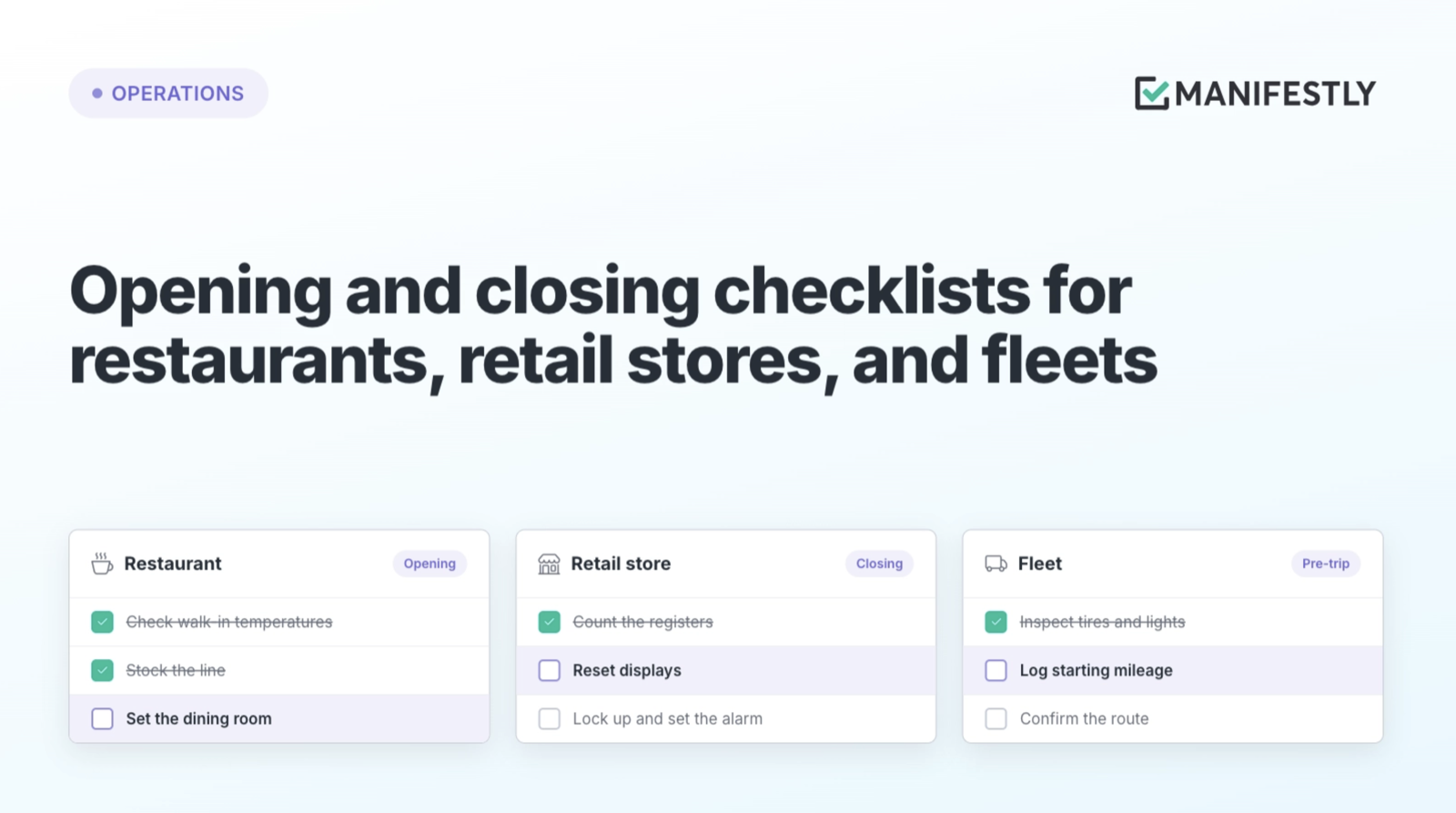
An opening checklist defines the tasks a team completes before the doors open or a vehicle leaves the yard. It covers the checks needed to begin work: safety, equipment, supplies, staffing, and any issues carried over from the previous shift. A closing checklist defines how the team finishes the day and prepares for the next one.
Both become more reliable when the process makes clear who completes each check, when it is due, and who responds when something is wrong.
The steps may already live on a clipboard, a laminated sheet, or a shared spreadsheet. The harder question is whether the process works just as well when someone covers a shift, equipment fails, or the manager is at another location.
This guide covers what belongs on opening and closing checklists for restaurants, retail stores, and fleets, and how to turn those checks into a recurring routine with clear ownership, review, and a completion record.
A completed checklist can still leave a problem unresolved
Take the walk-in cooler check. The opener records a temperature outside the acceptable range. The check is complete, and the reading is documented. Someone still needs to decide what happens next.
Who tells the manager? Who assesses the affected food and equipment? Which work needs to wait? Who confirms that the issue has been resolved?
A paper process can answer those questions. It might require the opener to contact the manager immediately and record the response. But if that follow-through is left undefined, the temperature can be recorded while the problem remains unresolved.
The same gap appears in other shift-based work. A store closer records a cash discrepancy without assigning the follow-up. A driver reports a vehicle defect, but maintenance does not receive it before the next dispatch.
When the same handoff keeps failing, look first at what the process requires people to remember or coordinate. The checklist may explain what to inspect while leaving the response to chance.
Reliable opening and closing routines define both: the work to complete and what happens when a check fails.
What an opening checklist covers
An opening checklist should help the team determine whether the location or vehicle is ready for work. The details depend on the business, equipment, and operating requirements. Use the following examples as starting points and adapt them to your procedures.
Restaurant opening checklist
Assign opening checks across the opening manager, kitchen lead, and other responsible staff, with enough time to resolve issues before service.
- Check and record walk-in and reach-in refrigerator temperatures.
- Stock hand sinks and check sanitizer concentration against the required standard.
- Prepare line stations and check prep quantities against expected demand.
- Count cash drawers and test the point-of-sale system.
- Walk the dining room, restrooms, and entrance for readiness and hazards.
- Confirm staffing and opening assignments.
- Prepare pre-shift notes covering unavailable menu items, specials, and large reservations.
- Assign any issue that needs attention before service begins.
Record readings where they matter. “Refrigeration checked” tells a manager less than the temperature, the time of the check, and any action taken when the reading was outside the required range.
Templates: Opening Restaurant Checklist, Food Safety and Hygiene Checklist, Pre-Shift Meeting Checklist. More in restaurant workflows.
Retail store opening checklist
The opening key holder coordinates the checks needed before customers enter, with individual tasks assigned to the appropriate staff.
- Follow the alarm and entry procedure.
- Count registers and test card terminals.
- Walk the sales floor to check displays, prices, spills, and other hazards.
- Check overnight deliveries and put priority stock on the floor.
- Confirm staffing, assignments, and break coverage.
- Confirm that exits and access to emergency equipment are unobstructed.
- Review unresolved issues from the previous shift and assign follow-up.
A handoff from the closer should give the opener enough information to act. An unresolved register discrepancy needs a responsible person and a next step, alongside the amount recorded.
Templates: Daily Store Opening Checklist, Store Manager Daily Routine Checklist. More in retail workflows.
Fleet pre-trip inspection checklist
Each driver completes the applicable checks before departure, following the fleet’s inspection procedures and vehicle requirements.
- Inspect tires, wheels, and lights.
- Check brakes, steering, and the horn according to the inspection procedure.
- Check fluid levels and look for leaks.
- Check mirrors, wipers, and windshield condition.
- Confirm that required emergency equipment is present and ready.
- Check required documents and logging equipment, where applicable.
- Report defects through the defined maintenance and dispatch process.
- Confirm that any issue affecting readiness has received the required review before departure.
The inspection record should make clear who determines whether the vehicle can return to service. Recording a defect is the beginning of that response.
Templates: Pre-Trip Vehicle Inspection Checklist, Emergency Equipment Inspection Checklist. More in transportation workflows.
What a closing checklist covers
Closing creates the conditions the next shift inherits. A drawer left uncounted, equipment left in the wrong state, or an unresolved defect can become the next opener’s problem.
A useful closing checklist records the work completed and gives unfinished work a clear handoff.
Restaurant closing checklist
- Store, label, and date food according to the restaurant’s procedures.
- Clean equipment and shut it down or leave it operating as required.
- Complete and record required final temperature checks.
- Count drawers, record discrepancies, and prepare the deposit.
- Complete cleaning and waste-removal tasks.
- Check doors and set the alarm according to the closing procedure.
- Record unresolved issues, assign follow-up, and identify anything the opener must review.
Templates: Closing Restaurant Checklist, Daily Kitchen Cleaning Checklist, Cash Handling and Management Checklist.
Retail store closing checklist
- Count and reconcile registers.
- Secure the deposit according to the cash-handling procedure.
- Tidy displays, return misplaced merchandise, and process returns.
- Check fitting rooms, the stockroom, and other areas covered by the closing procedure.
- Complete lighting, door, and alarm checks.
- Assign unfinished work and leave a handoff for the opening team.
Templates: Store Closing Checklist, Cash Handling Checklist.
Fleet post-trip inspection checklist
- Inspect for damage, tire issues, lighting problems, and leaks according to the fleet’s procedure.
- Record defects with enough detail for maintenance to assess them.
- Route reported issues to the responsible maintenance or dispatch contact.
- Record vehicle status and identify any review needed before the next assignment.
- Include information the next driver needs to know.
Template: Post-Trip Vehicle Inspection Checklist.
The handoff should be part of the process record. It needs to show what remains unresolved, who owns it, and when a decision or action is needed.
Paper checklists and recurring workflows
Paper is quick to use, needs no login, and can support a well-run operation. A paper checklist can include named owners, recorded values, review, and clear escalation instructions.
As shifts and locations multiply, more coordination is needed to distribute those sheets, review them, and follow up. A recurring workflow can support that coordination when assignments, schedules, notifications, and review steps are configured for the work.
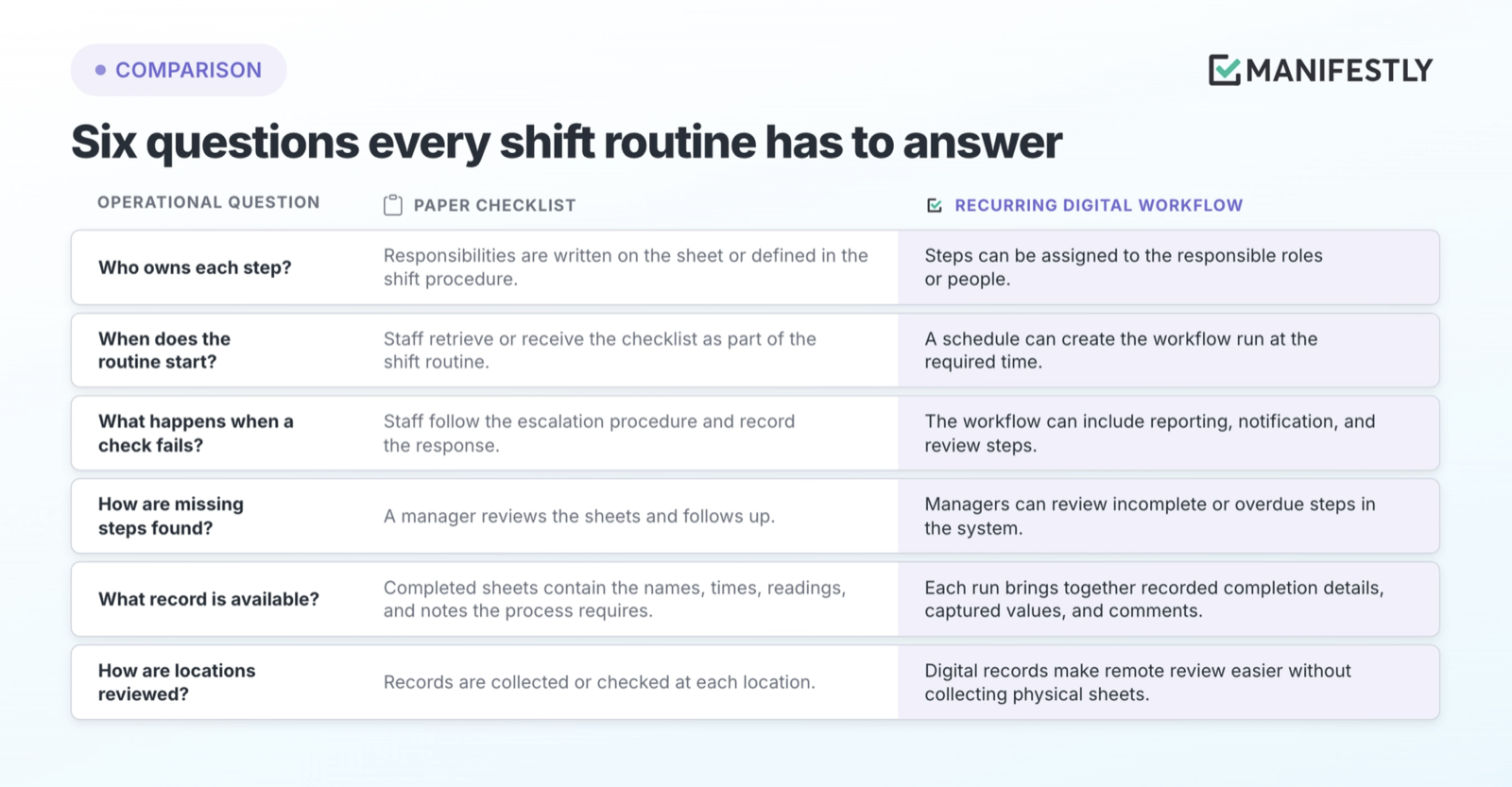
The useful test is whether the process reliably starts, assigns responsibility, brings problems to the right person, and records the response. Moving a checklist onto a screen only helps if those parts of the process work too.
How to turn a checklist into a reliable routine
Start with one opening or closing routine. Running it consistently will reveal where the instructions, timing, or handoffs need work.
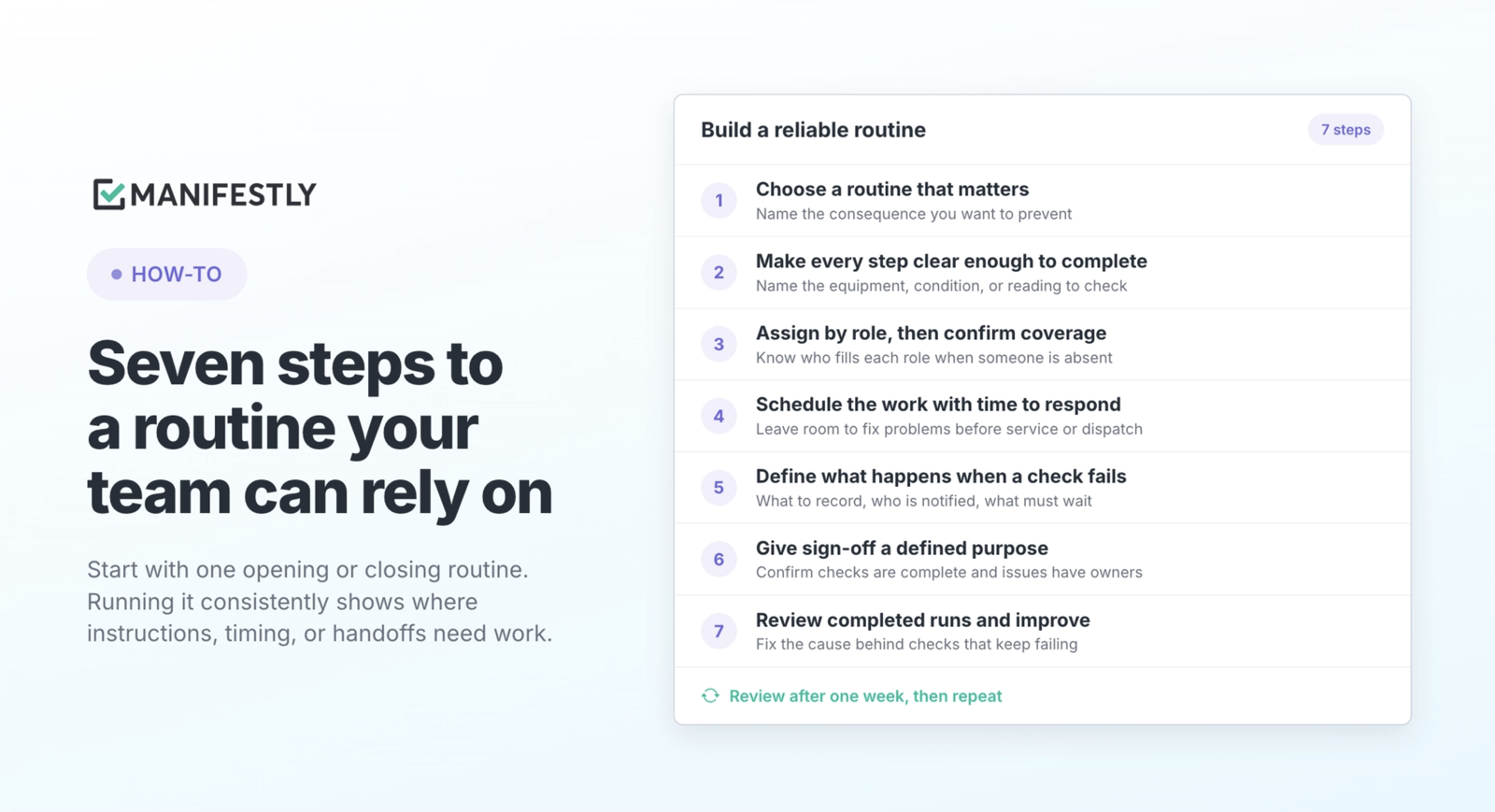
1. Choose a routine with a clear consequence when it is missed
Pick a process your team already recognizes as important: restaurant closing, store cash reconciliation, or vehicle inspections. Name the consequence you want to prevent so you can judge whether the routine is helping.
2. Make every step clear enough to complete
Remove duplicate tasks and vague instructions. “Check the kitchen” leaves too much to interpretation. Name the equipment, condition, or reading the person needs to check.
Keep checks that prevent a meaningful failure or require a separate record, even when they rarely uncover a problem. A low failure rate alone is not a reason to remove a control.
3. Define responsibility by role, then confirm shift coverage
Roles such as opening manager, closer, or driver help the process survive schedule changes. Each run still needs a responsible person. Confirm who fills each role when someone is absent or covering a different location.
4. Schedule the work with time to respond
Set the start time and deadlines around the work itself. A readiness check needs to happen early enough for someone to address a problem before service or dispatch. In a recurring workflow, configure the schedule so staff do not have to create each run manually.
5. Define what happens when a check fails
For each important check, specify what to record, who receives the issue, what action or review is required, and which work must wait for a decision. Include a follow-up route if the responsible person is unavailable.
This is where a checklist becomes part of an accountable process. The team knows how to respond when conditions are outside the expected standard.
6. Give sign-off a defined purpose
The manager’s review should confirm that required checks are complete and unresolved issues have an owner. Where an issue must be resolved before opening or dispatch, the review should confirm that decision too.
A signature is useful when everyone understands what the reviewer is confirming.
7. Review completed runs and improve the process
After a week, look for steps completed too late to help, repeated exceptions, and handoffs that remain unresolved. Ask whether the instructions are clear, the timing is workable, and staff have what they need to act.
If the same check keeps failing, completing more checklists will not fix the underlying issue. Use the records to identify the change needed in equipment, staffing, training, or the procedure itself.
Manifestly gives teams a place to run these recurring routines, with schedules, role-based assignments, data collection, and review steps. Set up the workflow around the responsibilities you have defined so each run gives the team a clear way to complete the work and record what needs attention.
Make the response part of the routine
Pick one opening or closing routine. Define who responds when a check fails, then review a week of completed runs. Look for unresolved issues, missed handoffs, and checks completed too late to help.
Those records should show where the process needs to change. An opening routine earns its value when a problem found before service reaches someone who can act while there is still time to resolve it.
Start a free trial of Manifestly and put one routine on a schedule, with clear assignments, review steps, and a record of what happened each shift.
Frequently asked questions
What should be on a restaurant opening checklist?
Opening checklists for restaurants include refrigeration temperature checks, sanitation setup, line preparation, cash and point-of-sale readiness, a check of customer areas, staffing, and pre-shift information. Define who responds when any check reveals a problem. Adapt the checklist to the restaurant’s equipment, procedures, and operating requirements.
Should opening and closing be one checklist or two?
Separate checklists usually make ownership and timing clearer because opening and closing happen at different times and may involve different teams. Connect them through a closing handoff that identifies unresolved issues and who will follow up.
How is an opening checklist different from a pre-shift meeting?
The opening checklist covers the checks and preparation needed before service. A pre-shift meeting coordinates the team around assignments, priorities, specials, and expected demand. The meeting can be a step in the opening routine, provided someone owns it and knows when it needs to happen.
Is a paper checklist good enough?
It can be, when the surrounding process defines ownership, timing, review, and follow-up. Consider a recurring digital workflow when distributing checklists, finding missing steps, or reviewing work across locations creates more coordination than the team can reliably manage.
How do you get staff to complete opening and closing checklists?
Make the steps clear, assign responsibility, and allow enough time to complete the work. Explain what staff should do when they cannot complete a check or find a problem. When a step is repeatedly missed, examine the instructions, timing, workload, and available resources before deciding how to address it.